You finish another long day at the desk and your lower back feels tight, your shoulders have crept up towards your ears and you realise you have barely moved since lunch. It is a familiar story. The NHS notes that many adults in the UK spend around nine hours a day sitting, and for office workers, drivers and anyone working from home, that figure can easily feel conservative.
No meal plan can undo a sedentary day. What you eat still matters, though, because your muscles, bones and joints rely on a steady supply of nutrients whether you are active or not. This guide looks at how a balanced diet supports your body during long seated days, and why it works best alongside regular movement rather than in place of it.
What Happens When You Spend Most of the Day Sitting
Sitting for long periods means the large muscles in your legs, hips and back do very little work. Over time, that can leave you feeling stiff, with tension building in the neck, shoulders and lower back, especially if your posture slips as the afternoon wears on.
There are wider effects too. According to the NHS, long periods of sitting are thought to slow the metabolism, which affects how well the body regulates blood sugar and blood pressure and breaks down fat. It is worth noting that much of this evidence comes from observational studies, which show a link between sitting and ill health rather than proving direct cause.
Why a Good Diet Still Matters When Movement Is Limited
It would be convenient if eating well cancelled out a day in the chair, but the evidence does not support that. The UK Chief Medical Officers’ physical activity guidelines point out that, for some health outcomes, the effects of sedentary behaviour appear to occur regardless of how much moderate or vigorous exercise people do.
What a balanced diet can do is provide the building blocks your body needs for normal muscle, bone and nerve function. When you are moving less, it makes sense to make the food you do eat count.
The Nutrients That Support Muscles and Bones
Protein
Protein helps maintain muscle tissue, which matters when your muscles are getting less use than they would like. Spreading it across the day, rather than loading it into one evening meal, is a practical approach. Beans, lentils, eggs, fish, tofu and Greek yoghurt are all easy options, and if you lean towards plants, our guide to the benefits of a plant-based diet covers plenty of protein-rich ideas.
Calcium and Vitamin D
Calcium and vitamin D work together for bone health. The British Dietetic Association suggests an ideal daily calcium intake of 700mg for adults, from sources such as dairy, calcium-fortified plant milks, tinned fish with soft bones and leafy greens. The same guidance notes that inactive people find it harder to strengthen their bones, even with a calcium-rich diet, which is a useful reminder that food and movement go hand in hand.
Vitamin D is harder to get from food alone. The NHS advises that everyone should consider a daily 10 microgram vitamin D supplement during autumn and winter, when the sun is not strong enough for the body to make enough. For more on this topic, see our article on managing bone health.
Magnesium
Magnesium helps turn food into energy and supports the parathyroid glands, which produce hormones important for bone health. Food Standards Scotland recommends 300mg a day for men and 270mg for women, which most people can get from leafy greens, nuts, wholegrain bread, fish and dairy.
Omega-3 Fatty Acids
The NHS recommends at least two portions of fish a week, including one of oily fish such as salmon, mackerel or sardines, which are the richest source of long-chain omega-3. If you do not eat fish, walnuts, chia seeds and ground flaxseed offer a plant-based form.
Overall Diet Quality Matters More Than Any Single Food
It is easy to fall into the trap of hunting for one ingredient that will fix everything. In reality, the overall pattern of your meals counts for far more. Desk days often run on biscuits, meal deals and whatever is in the office kitchen, and many so-called healthy snacks carry more than you might expect, as we explain in our piece on hidden additives in healthy snacks.
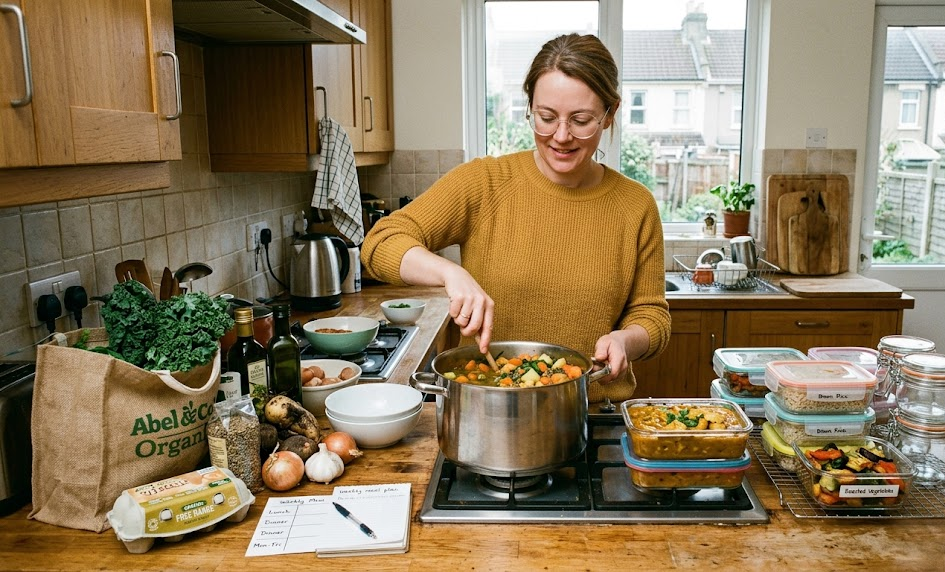
Preparing lunches in advance takes much of the guesswork out of busy weeks. Our guide to batch cooking on a budget is a good starting point.
A Simple Desk-Day Checklist
- Include a source of protein at breakfast, lunch and dinner.
- Add vegetables or fruit to every meal, including at least one leafy green each day.
- Keep a handful of unsalted nuts or seeds at your desk instead of biscuits.
- Aim for one portion of oily fish a week, or a plant-based omega-3 alternative.
- Consider a vitamin D supplement from October to March.
- Keep a water bottle within reach and refill it when you get up.
- Stand up, stretch or walk for a minute or two at least once an hour.
Pair Your Plate With Regular Movement
Food supports your body, but movement is what keeps it working the way it should. The Chief Medical Officers recommend that adults build up at least 150 minutes of moderate activity each week and break up long periods of sitting with at least light activity. The NHS adds that there is not yet enough evidence to set a daily limit on sitting time, so the focus is on interrupting it rather than counting hours.
In practice, that can be as simple as taking calls on your feet, walking to a colleague instead of sending a message, changing position regularly and fitting in a short walk at lunch.
If stiffness, muscular tension or headaches keep returning despite these changes, it is worth getting them looked at rather than assuming your chair or your diet is to blame. A professional assessment, from your GP or a specialist practice such as Neuromuscular Clinic, can help identify what is actually behind the discomfort.
Making Long Desk Days Easier on Your Body
That tight back and those stiff shoulders at the end of the day are signals worth listening to. A balanced diet rich in protein, calcium, vitamin D, magnesium and omega-3 gives your muscles and bones what they need to function normally, but it works best as part of a wider routine. Pair good food with regular breaks from sitting, and pay attention to any discomfort that will not settle. Small, consistent habits will do far more for you than any single superfood.